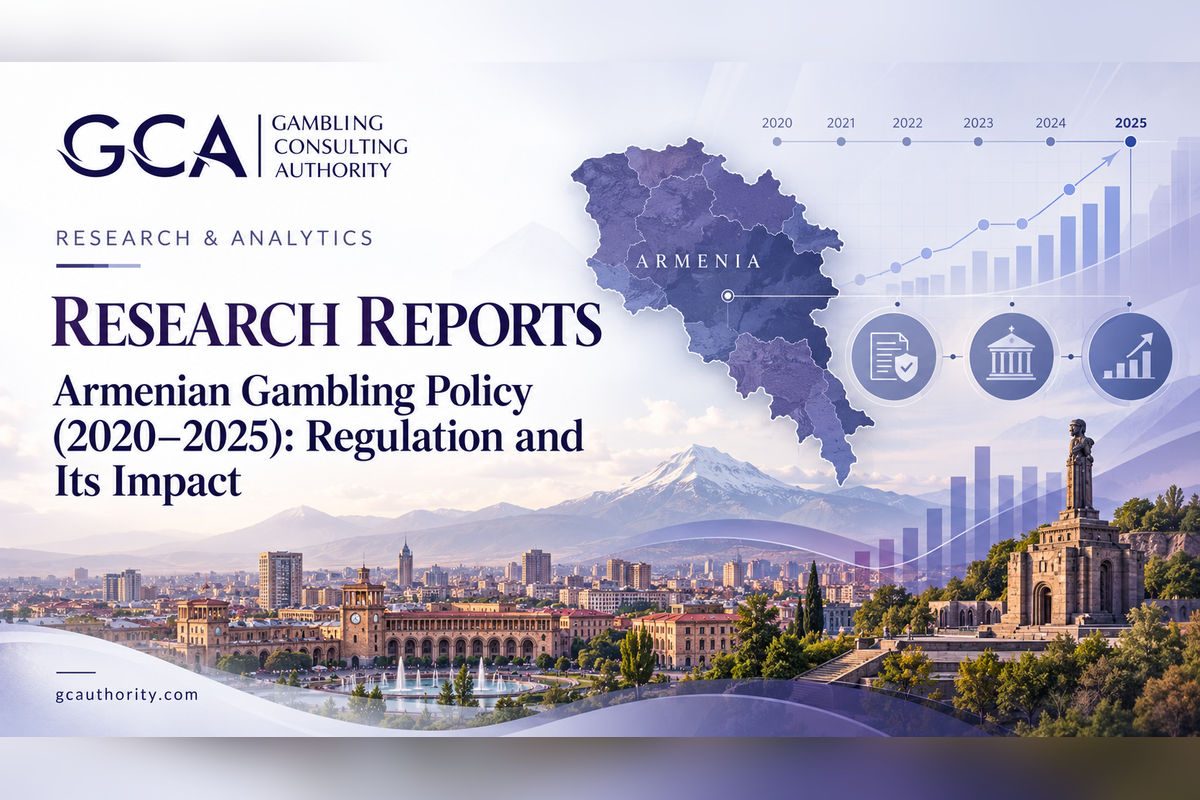
Armenian Gambling Policy (2020–2025): Regulation and Its Impact
Reported by Gga. GCA summarises industry reporting and credits its source; its own signed analysis is published separately under Expert Voices.
Key findings
• Since 2022, the Armenian government has been systematically tightening gambling legislation; these changes have already led to a reduction in the number of legal operators, job losses and decreased tax revenues, and the further tightening and tax increases planned for 2025 threaten to destabilise the market completely.
• The restrictions introduced in 2022–2023 include a ban on gambling advertising (except on specialised platforms), operation only in four designated zones and limits on participation with mandatory identification of players.
• Taxes from the gambling sector nearly halved from $85 million in 2020 to $40 million in 2024, and the number of gambling establishments fell from 455 in 2020 to 45 in 2024, with job losses, a decline in related industries and reduced financing of social programmes.
• When the legal market is suppressed, the transition to the illegal sector becomes inevitable: unlicensed online casinos and betting companies operate through VPNs, and capital flows abroad as companies register in Curaçao, Malta and Cyprus while continuing to serve Armenian players.
• The tax conditions planned for 2025 — a sharp increase in licensing fees, higher turnover taxes, additional fees for each service point and stricter financial reserve requirements — would make it unprofitable for most legal operators to continue.
• The alternative development path is to preserve the legal market, ensure reasonable regulation instead of total bans, implement social programmes against gambling addiction and revise tax policy to support sustainable business operations.
Main Analysis
Regulatory Approach and Its Premises
State intervention in market processes should be balanced and take into account long-term economic and social consequences. In Armenia, however, the regulatory policy is flawed: instead of protecting citizens' interests, it deals a serious blow to business, tax revenues and social stability.
Since 2022, the Armenian government has been systematically tightening legislation in the gambling industry. These changes, driven more by political motives than economic calculations, have already led to a reduction in the number of legal operators, job losses and decreased tax revenues.
The planned further tightening of laws and tax increases in 2025 threaten to completely destabilise the market, forcing legal businesses either to leave the country or go underground. Correcting the consequences of such decisions in the future will be extremely difficult.
As in many other cases, the officials who make such decisions are not responsible for the consequences. They do not consider which business processes may be disrupted, how many companies will close or how many people will lose their jobs.
In practice, unjustified bans and excessive taxes only contribute to the growth of the illegal market, which quickly fills the vacant niche. As a result, not only businesses but also the state loses, forfeiting control over the industry and millions of dollars in tax revenues.
The official arguments of the authorities, such as protecting the population and increasing budget revenues, seem convincing at first glance. However, the experience of other countries that have implemented similar restrictions shows that the effect is the opposite.
When a legal business that diligently pays taxes and participates in social programmes is forced to leave the market, its place is taken by the illegal sector. This sector not only fails to contribute to the budget but also creates additional risks for players, as it operates outside government regulation.
The policy of unnecessarily tightening the regulation of the gambling business in Armenia leads to disastrous consequences:
• Decrease in tax revenues — the budget loses significant income.
• Increase in unemployment — the closure of legal operators leads to mass layoffs.
• Expansion of the illegal market — the state loses control over the industry.
• Reduction of social programmes — a decrease in charitable projects and sponsorship support.
If the state truly wants to protect citizens and increase budget revenues, the focus should be not on bans but on developing the legal market, creating effective control mechanisms and supporting responsible gaming. Only this approach can maintain a balance between state interests, public protection and economic stability.
Restrictions Introduced in 2022–2023
Since 2022, the Armenian authorities have imposed strict restrictions on the gambling industry under the pretext of combating gambling addiction and strengthening state control. However, these measures have failed to achieve their stated goals and have caused significant damage to the economy, tax revenues and the labour market.
Between 2022 and 2023, the country introduced major restrictions that effectively drove gambling out of cities and reduced its market presence. Among the key measures:
• Advertising ban: gambling advertising in the media, on the streets and online is prohibited, except on specialised platforms.
• Limited access points: operators are allowed to operate only in four designated zones, forcing businesses to close branches in other regions.
• Player restrictions: limits on participation in games and mandatory identification have reduced the potential audience.
Economic and Social Consequences
The changes have resulted in the following:
• The mass closure of gambling establishments has led to a decline in tax revenues.
• Thousands of people have lost their jobs, especially in regions with limited employment opportunities.
• Local entrepreneurs who owned gaming halls and terminals were forced to shut down their businesses.
• Business activity in related industries such as advertising, commercial real estate rentals and services has declined.
• The state budget lost tens of millions of dollars a year. In 2020, taxes from the gambling sector contributed $85 million to Armenia's budget. By 2024, this figure had nearly halved to $40 million.
• The decline in revenues has led to a decrease in the financing of social programmes.
• The expected tax increase in 2025 may completely drive the remaining companies out of the market, leading to a total shift of business into the shadows.
The number of gambling establishments in Armenia has sharply declined — from 455 in 2020 to just 45 in 2024.
The gambling industry is not just about big companies, but also franchises, small halls, lottery outlets and betting points, which created jobs and supported the local economy.
Small businesses have suffered, including bars and cafes with slot machines, independent betting shops and lottery kiosks that provided income to local entrepreneurs. Their place has been taken by illegal operators working outside the legal framework.
Shift to the Illegal Sector
When the legal market is suppressed, the transition to the illegal sector becomes inevitable:
• Unlicensed online casinos and betting companies operating through VPNs emerge.
• Capital outflow abroad occurs as companies register in Curaçao, Malta and Cyprus while continuing to serve Armenian players.
Dialogue with the Industry and Social Programmes
One of the main criticisms of the government is its refusal to consult with representatives of the gambling industry. Decisions are made unilaterally, without taking into account the opinions of entrepreneurs and experts. There is no comprehensive programme to help gambling addicts; instead of reasonable regulation, the authorities simply ban the business. The economic consequences, the outflow of capital, the growth of unemployment and the development of the illegal market are ignored.
Planned Tax Changes from 2025
Starting in 2025, Armenia will implement even stricter tax conditions for the gambling industry. The changes will include:
• A sharp increase in licensing fees for online bookmakers and casinos.
• A rise in turnover taxes, making operations unprofitable for most operators.
• Additional fees for each service point (both online and offline).
• Stricter financial reserve requirements for companies, making it more difficult for even large players to operate.
In practice, this means that:
• It will become unprofitable for most legal operators to continue operating.
• Small businesses will not be able to withstand the tax burden and will go bankrupt.
• Players will move to illegal platforms, which lack consumer protection and fair payout guarantees.
Amid such restrictions, a logical question arises: if legal operators are forced to shut down, who takes their place? The answer is obvious — the illegal market. Prohibitive policies create ideal conditions for the growth of underground casinos and unlicensed online platforms that do not pay taxes, are not regulated by the state and do not protect players' rights.
Expected Consequences of the Policy
The government's mistakes will lead to the following:
1. The elimination of an entire industry — hundreds of companies and thousands of jobs lost.
2. Capital and player outflow to international offshore platforms.
3. A sharp decline in tax revenues (contrary to expectations of growth).
4. Expansion of illegal and unregulated gambling businesses.
5. Increased social tension (unemployment and business withdrawal from regions).
6. Potential rise in crime and underground gambling establishments — without state control, gambling moves into the shadows.
7. Lack of a comprehensive citizen protection programme (gambling addiction will not disappear — only legal control mechanisms will).
Recommendations
Alternative Development Path
If the Armenian authorities truly want to regulate the gambling industry rather than destroy it, and thus protect the population and preserve tax revenues, they must rethink their strategy:
• Preserve the legal market instead of creating conditions for illegal business.
• Ensure reasonable regulation instead of total bans.
• Implement social programmes to combat gambling addiction.
• Revise tax policies to support sustainable business operations.
Only a balanced approach will allow the government to maintain budget revenues, jobs and a stable economic environment without handing the market over to illegal operators.
Prohibitions cannot eliminate demand — they only deprive the state of control and revenue. The legal industry can be beneficial, but only with smart regulation. If Armenia continues its policy of bans and high taxes, the market will completely shift into the shadows, and the budget will suffer irreparable losses.
GCA provides regulatory analysis, market-entry strategy and expert assessments for governments, regulators and operators. Contact: gcauthority.com
Related markets
Related expertise