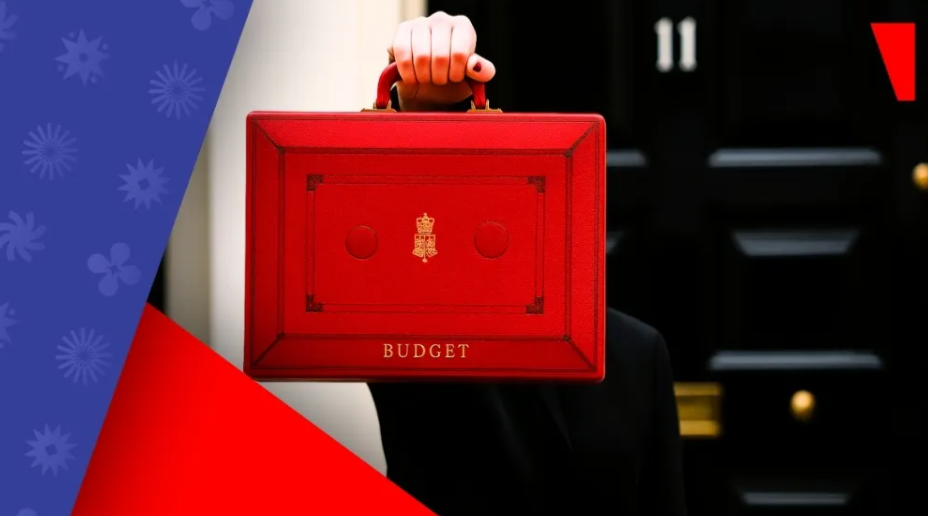
Tomorrow, UK Chancellor Rachel Reeves will deliver a Budget that many in the gambling sector describe as the most consequential in a generation. As Westminster moves toward Wednesday’s announcement, operators across the country wait in a state of wary anticipation. The debate around UK gambling tax has moved beyond speculation and is now widely expected to result in higher duties. The question is no longer whether duties will rise, but by how much, and at what cost to jobs, investment, and the UK’s competitiveness.
The mood inside gambling firms is tense. Executives have spent the past month running scenario plans with numbers that swing from uncomfortable to existential. The Betting and Gaming Council has been blunt, warning that “any tax increase is a direct threat to British jobs and economic growth”. Yet the greater threat may be uncertainty itself. When policy direction becomes opaque, boards retreat and protect. They trim investment, move functions abroad, tighten recruitment, or rethink long-term strategy. This is already happening, and the Budget has not even been delivered.
The most symbolic example arrived recently when Sky Bet, part of Flutter Entertainment, announced it would relocate its headquarters to Malta. The official line focused on efficiency and organisational clarity. Industry analysts pointed to a more basic truth. In Malta, some companies can pay close to five percent in corporation tax, a clear contrast to the UK’s 25 percent rate. Flutter already had teams in Dublin, Malta, and the Isle of Man, so the move was not a major stretch. Analysts say Sky Bet could cut its UK tax bill by roughly £55 million a year by shifting more of its decision-making offshore.
The company will retain a major presence in Leeds, and jobs will remain. Yet that reassurance masks a more significant realignment beneath the surface. The functions that shape commercial decision-making are now based offshore. Once those functions migrate, investment and intellectual capital follow. Corporation tax receipts follow too.
Sky Bet’s decision is not an isolated case. The pattern turns up across every part of the economy that depends on steady rules. Malta, the Isle of Man, and Gibraltar are now pulling in companies that once thought of the UK as their natural base. Those places offer something the UK used to give almost without thinking. Predictability. Much of the pressure that has pushed firms to reconsider their footprint stems from the wider debate over UK gambling tax and the uncertainty surrounding it for more than a year. Confidence in the long-term environment has eroded.
The regulatory environment has intensified at the same time. Back in October 2025, the Gambling Commission brought in a new penalty system that can hit operators with fines worth up to fifteen percent of their Gross Gambling Yield when the breaches are serious. We have already seen it in action. Videoslots was fined £650,000 for anti-money laundering failings. The pressure is also moving down the chain, with the regulator making it clear that suppliers who deal with unlicensed operators will not get a free pass.
Compliance costs from the Gambling Act Review White Paper keep climbing, inch by inch, year by year. Across the industry, the bill is already set to pass £1 billion, with an extra £100 million each year for the statutory levy that funds research, education, and treatment. No one disputes the intent. It is the moment these costs arrive that unsettles people. They fall on an economy already uneasy, where pressure builds not from one rule or one fee, but from the slow, growing weight of enforcement, fiscal demands, UK gambling tax uncertainty, and the political weather that never quite settles.
Inside the sector, two scenarios dominate internal planning as firms try to anticipate how the Budget will reshape the UK gambling tax landscape.
The first is the modest, or politically cautious, option. Under this approach, analysts expect online betting duty to rise from 15 percent to somewhere between 17 and 18 percent. Machine Games Duty could move from 20 percent to roughly 21 or 22 percent. Horserace betting duty would remain at 15 percent. Racing would still face an £8-£14 million reduction in expected levy income, but the wider market could absorb the shift without severe structural damage.
The second scenario is what industry voices describe as the catastrophic outcome. Proposals from former Prime Minister Gordon Brown, combined with policy papers from the Institute for Public Policy Research, argue for duty rates of fifty percent on remote gaming and machine gaming, and a thirty percent duty on online betting. These ideas have gained traction among MPs who view increases in UK gambling tax as a politically safe way to raise revenue at a time when public finances are under strain.
For operators, this would be unmanageable. Betfred has already modelled a rise in Machine Games Duty from 20 to 25 percent. Even that smaller increase would lead to the closure of more than 380 betting shops, the loss of over 2,000 jobs, and an £11 million reduction in funding to the racing sector. A fifty percent rate would go far beyond that.
The Betting and Gaming Council commissioned EY to model the Treasury’s likely return. While some think tanks suggest the government could gain £3 billion, EY’s analysis indicates that the true return could fall below £500 million once job losses, reduced corporation tax, and lower National Insurance are taken into account.
The real fear sits in the shadows. The black market already pulls in more than 1.5 million people across Britain, according to the industry’s own estimates. Lift UK gambling tax too far, and the quiet shift toward unregulated sites can quickly gather pace. Licensed operators warn that steep duty rises risk undermining what the Treasury wants to achieve, weakening consumer protection, pushing more players offshore, and reducing the tax base rather than growing it. The pattern is familiar in other regulated markets, where pressure without balance has pushed activity beyond reach rather than keeping it safe.
Political momentum favours higher taxes. Internal Labour polling shows strong public support for increases. More than eighty percent of respondents tell researchers they want gambling taxes raised. This creates obvious pressure on a Chancellor tasked with addressing a projected £20 billion fiscal shortfall, while a public mood sees changes to UK gambling tax as both necessary and politically safe.
Recent figures add to that pressure. According to a Guardian report, recent industry data shows that gambling firms generated an extra £1 billion in the year to March, taking total takings (excluding lotteries) to £12.6 billion. At the same time, the Treasury is facing a fiscal hole of roughly £20 billion. Together, those numbers intensify the debate over how far the Chancellor may go with UK gambling tax and whether the sector will be expected to carry more of the load.
Racing may secure protection. Its “Axe the Racing Tax” campaign has gained traction across rural constituencies. Betting shops may also find some relief, with MPs warning that steep duty rises would hit high streets in regions already struggling with employment and investment.
The sector most exposed is online gambling, particularly casino and slots. These products face the toughest political headwinds due to their perceived link with addiction risk. A fifty percent duty remains unlikely, but a rise toward thirty percent is now viewed as a credible outcome by analysts and political advisers. Such a shift would mark the most significant change to UK gambling tax in more than a decade. It would place fresh pressure on operators already dealing with regulatory and compliance costs. Regulatory consultants share this concern. Ahead of the Chancellor’s budget on Wednesday, Lee Hills, CEO of leading iGaming regulation consultancy SolutionsHub, says the UK government’s inconsistency and incompetence have led to a growing disconnect between policymakers and industry.
The industry’s deepest concern is not the tax itself, but the uncertainty it creates. Operators can absorb fair and transparent duties. What they cannot absorb is policy-making that oscillates between consultation, enforcement, speculation, and political messaging. The wider debate around UK gambling tax has added to that instability, with firms unsure how to plan for the next twelve months, let alone the next decade.
Flutter’s relocation to Malta is a symptom rather than a cause. It reflects a wider recalculation, one shared quietly by several operators who are waiting to see how tomorrow lands before finalising their long-term plans.
If the Chancellor delivers clarity, even with increases, the sector can adjust. If the Budget introduces volatility or punitive structures without consultation, the long-term economic cost could outweigh any immediate fiscal gain.
Tomorrow decides which story the UK chooses.
Collaboration or confrontation. Investment or migration. Stability or speculation. The industry is prepared for impact. It now waits to see whether Rachel Reeves will steady the ground or shake it further.
#UKGamblingTax #Budget2025 #Regulation #GamingIndustry #EconomicImpact

Welcome to Gambling Consulting Authority (GCA) - Your Strategic Partner in Gambling Industry Advancement