South Carolina lawmakers have begun debating the legalisation of online sports betting, but the effort faces a significant roadblock: Governor Henry McMaster’s steadfast opposition to gambling.
On Wednesday, the Senate Labour and Commerce Subcommittee reviewed SB 444, a proposal to create the South Carolina Sports Wagering Commission. Co-sponsors Senators Tom Davis and Matthew Leber argued that regulation would provide oversight and generate new tax revenue. The committee, however, postponed a vote.
Governor McMaster has long resisted gambling, calling it “bad for our culture.” Earlier this year, he rejected a casino proposal in Orangeburg County intended to spur economic growth, and he has pledged to veto any sports betting bill that reaches his desk.
With his term ending in 2026 and no chance of reelection due to term limits, his stance remains a formidable obstacle for supporters. Media reports note that his opposition stems largely from cultural and moral concerns.
Introduced in March 2025, SB 444—formally the South Carolina Sports Wagering Act—would amend Title 39 of the state code to authorise sports wagering. The bill initially allowed the commission to issue up to eight licences. An amendment from Senator Josh Kimbrell reserved two of those licences for the PGA Tour and NASCAR, which the committee adopted.
Restrictions include barring companies already licenced in five or more jurisdictions, taxing operators at 12.5 percent, and setting the legal betting age at 18. Only five states—Kentucky, Montana, New Hampshire, Rhode Island, and Wyoming—currently permit betting below age 21.
Also at the hearing was Trevor Hayes, Caesars Entertainment’s vice president of government relations. He pointed out the widespread use of offshore sportsbooks by South Carolina residents. GeoComply data recorded nearly 12 million geolocation checks from residents attempting to access legal platforms during last year’s NFL season, with more than 50,000 crossing into North Carolina to place bets.
Faith-based groups remain vocal opponents, testifying against legalisation. Although Senator Kimbrell personally opposes gambling based on moral grounds, he acknowledged that regulation may be the most practical way to address the industry’s presence.
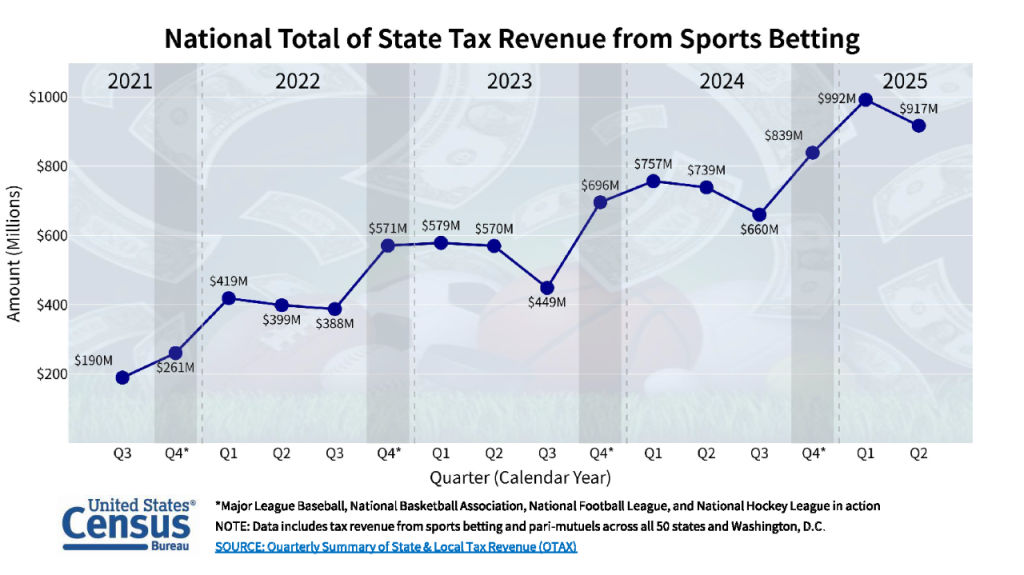
(Source: United States Census Bureau)
Supporters estimate that legal sports betting could generate up to $60 million annually in tax revenue. Other projections, based on a 10 percent tax rate, suggest $32 million in annual revenue once the market matures, with gross gaming revenue exceeding $320 million, according to the Tax Foundation.
Lawmakers also raised concerns about prediction markets and potential insider trading risks. FanDuel’s Louis Trombetta, who was present at the hearing, noted that such markets fall under the jurisdiction of the Commodity Futures Trading Commission (CFTC), though lawsuits between state regulators and operators continue nationwide.
Still debates continue because the federal courts have issued conflicting rulings. Some, as suggested by Trombetta, believe that prediction markets fall under CFTC oversight, yet other states, like Nevada, have considered them illegal, and state regulators have the right to intervene.
#SouthCarolina #SportsBetting #GamblingRegulation #USPolitics #SB444 #CFTC #FanDuel #Caesars #iGaming

Welcome to Gambling Consulting Authority (GCA) - Your Strategic Partner in Gambling Industry Advancement