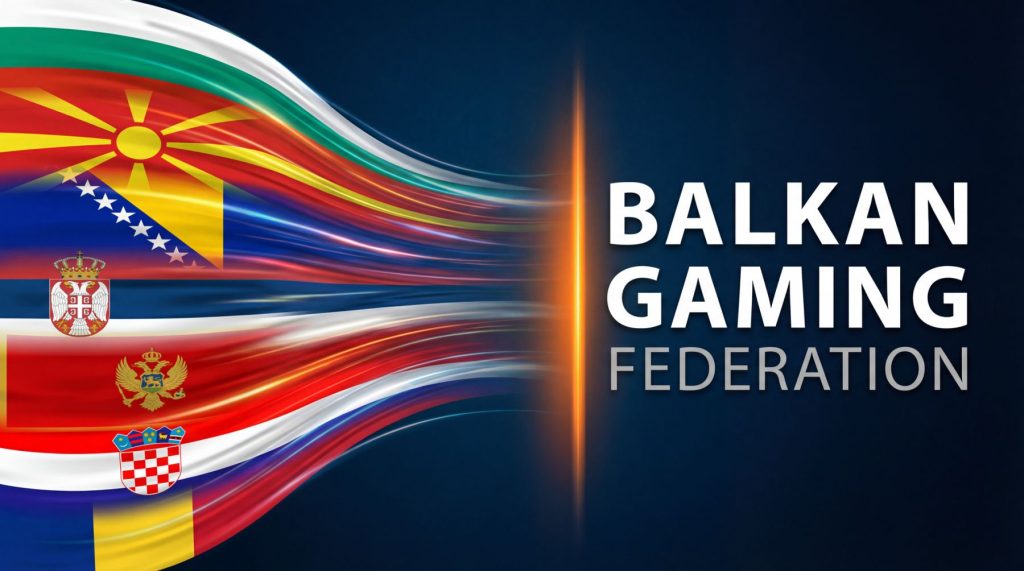
The establishment of the Balkan Gambling Federation (BGF) stands out as one of the most significant institutional developments in the Balkan gambling industry in 2026. Formed by associations from seven countries, the federation aims to create a unified platform to coordinate the interests of the regulated sector, tackle offshore gambling, and foster a more structured dialogue both within the region and at the European level.
Although BGF is still taking shape organizationally, its emergence already reflects a growing push among Balkan markets toward greater consolidation, transparency, and collective representation. Stasya Yautodzyeva, Head of Analytics at 4H Agency, outlines the federation’s core objectives and future prospects.
What is BGF?
The Balkan Gaming Federation is a newly launched regional industry body created by seven national gambling-industry associations from Serbia, Bulgaria, Croatia, Romania, Montenegro, Bosnia and Herzegovina, and North Macedonia. It was initiated in Belgrade at the end of March 2026, with the process led by Serbian and Bulgarian associations.
BGF consists of the following members: AGOS from Serbia, AOGGAB from Bulgaria, HUPIS from Croatia, ROMSLOT from Romania, GPIS from Montenegro, UPIS RS from Bosnia and Herzegovina, and MAK GEJMING from North Macedonia. Therefore, it is a federation of business associations representing operators, suppliers, manufacturers, and technology providers.
The core purpose of BGF is practical and representative: to collect and coordinate industry views, bring together stakeholders from different Balkan markets, strengthen the legal market’s visibility, and create a shared regional platform for dialogue and cooperation. Official materials say the federation aims to pool expertise and resources, support the fight against illegal gambling, address unfair competition, exchange regulatory best practices, develop cross-border business partnerships, organize regional events, and promote the Balkans more visibly within Europe’s gambling sector.
Current state of BGF
BGF has been launched, but it is still being finalized. The memorandum signed in Belgrade was only the first official step in building the federation. The next formal stage is scheduled for May 26, 2026, in Belgrade during the Belgrade Future Gaming exhibition, where the federation is expected to have a joint stand and where the basis of its future statute is expected to be reviewed and voted on.
By autumn 2026, the process is expected to enter its next phase, which will include a clearer official structure and the election of the federation’s first president.
Now BGF exists politically and institutionally, but not yet in a fully operational form. It already has a declared mission, a founding coalition, and a timetable, but no finalized statute, a completed governance structure, or an announced president. Once those pieces are in place, it is reasonable to expect that BGF will begin working more actively in several areas already identified by its founders: joint representation of the legal sector, cross-border industry coordination, regional events and business links, shared messaging against illegal gambling, and structured dialogue with European and national stakeholders. This last point is partly confirmed by official plans and partly an inference from the announced objectives.
How BGF may affect the industry
For the industry, the value of BGF is fairly easy to understand.
The Balkan markets are geographically and commercially close, but they remain fragmented in their regulatory structures, political priorities, and market maturity. That fragmentation makes it harder for the legal sector to speak clearly, harder to compare approaches, and harder to respond to shared problems such as illegal gambling, unfair competition, patchy enforcement, tax pressure, and uneven public messaging. BGF does not eliminate those differences, but it provides the region with a space where they can at least be discussed, compared, and translated into common industry positions.
It’s important to note that without a regional format, each national association remains largely confined to its own market, even when the underlying challenges are regional:
A federation can make all of that more legible. It can help the industry share best practices more quickly, present stronger evidence to policymakers, coordinate responses to illegal competition, and improve the visibility of legal operators and suppliers in the region.
It also helps that BGF is being built as a Balkan body rather than a top-down European one, since that gives it a better chance of reflecting local market realities. The Balkans need a body that can aggregate local industry concerns, speak credibly to European counterparts, and explain the region on its own terms. That positioning could become one of BGF’s main strengths if the federation is well structured.
Overall, the broader outlook is positive. The Balkans are a serious gambling region with established markets, active operators, strong supplier presence, and growing links to the wider European sector. The region is diverse, but that is exactly why a coordination body can be useful. If BGF develops well, it could become both a channel through which the Balkans learn from Europe and a channel through which Europe pays more attention to Balkan market experience. That is still potential rather than a proven fact, but it is a realistic one.
Therefore, the creation of BGF is a positive sign for industry regulation because it fills a genuine gap. It can make the legal market more coordinated, more visible, and more effective in defending its interests – in practical terms, that means better communication, more structured stakeholder input, stronger regional branding, and potentially more influence in debates about illegal gambling and market development.
#Balkans #Regulation #Compliance #GamingIndustry #Collaboration #MarketDevelopment

Welcome to Gambling Consulting Authority (GCA) - Your Strategic Partner in Gambling Industry Advancement