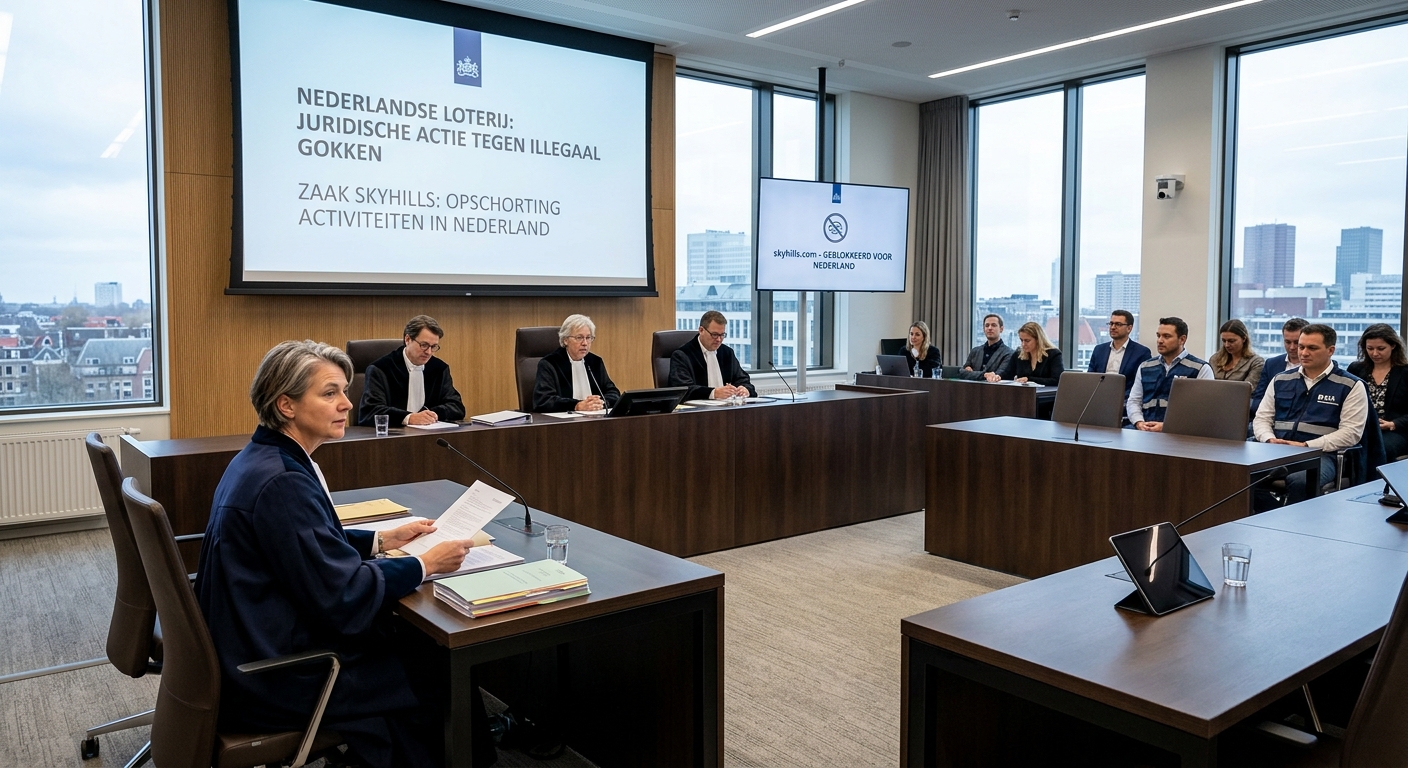
State-controlled gambling operator Nederlandse Loterij has formally targeted unlicensed platform Skyhills, marking the third major legal action in its escalating strategy to dismantle offshore operations servicing Dutch consumers. Following direct cease-and-desist demands issued to the platform’s operators and directors, Skyhills rendered its site inaccessible within the Netherlands. Beyond immediate domain disruption, Nederlandse Loterij is forcing corporate disclosures to uncover executive leadership, parent entities, and underlying shell structures, establishing actionable groundwork for broader civil liability proceedings.
Targeting Corporate Architecture Over Digital Domains
This enforcement strategy reflects a tactical pivot away from domain-level blocking toward holding individuals and corporate intermediaries accountable. Nederlandse Loterij previously deployed identical litigation models against offshore brands Lalabet and Qbet. In June, the District Court of The Hague validated this strategy in the Lalabet proceedings, ruling that backend decision-makers acted unlawfully by targeting Dutch residents and ordering full disclosure of ownership structures. However, after the court declined to hold Curaçao-based trust administrator DECC liable due to evidentiary limits, Nederlandse Loterij filed an appeal to extend legal accountability to third-party administrative facilitators.
Disconnect Between Player Counts and Revenue Channelization
The aggressive legal campaign unfolds against a growing commercial divide within the Dutch gambling market. Latest regulatory data from Kansspelautoriteit (KSA) reveals a sharp divergence between player participation and financial volume: while licensed platforms capture 91 per cent of active online gamblers, they command just 53 per cent of total gross gaming revenue. This disparity confirms that black-market platforms generate disproportionately high spend per user, absorbing substantial capital while operating completely outside statutory responsible gaming controls, deposit caps, and national player protection registries.
Legislative Reforms and Service Provider Accountability
In response to widespread evasion tactics, Dutch regulatory and legislative authorities are expanding structural oversight across the supply chain. The KSA’s 2026 enforcement program specifically prioritizes systemic disruption by forcing active compliance from technical intermediaries, including hosting providers, payment processors, and social media platforms. Complementing these supervisory efforts, government reform packages introduced in mid-2026 aim to establish statutory web-blocking powers alongside strict liability standards for commercial entities that enable unlicensed operators to reach Dutch players.
#Netherlands #GamingRegulation #NederlandseLoterij #ResponsibleGambling #OffshoreGambling #KSA #iGamingCompliance #PublicPolicy #LegalFramework

Welcome to Gambling Consulting Authority (GCA) - Your Strategic Partner in Gambling Industry Advancement